Does an Insulated Garage Door Make a Difference in Texas?
Yes, if the garage is attached to living space. On a July afternoon an uninsulated steel door facing west turns the garage into an oven, commonly 20 to 30 degrees above the outdoor temperature. An insulated door with good perimeter seals cuts that gap sharply, so the shared wall and the floor above stop radiating heat all evening.
The garage itself is not conditioned space in a typical Frisco house, so do not expect the electric bill to fall by much. The benefit shows up as comfort in the adjoining rooms, a cooler car in the morning, and an opener, water heater and freezer that live in a gentler climate. It also shows up in January, when the same door keeps pipes and paint cans in the garage above freezing on the handful of nights that matter.
The North Texas numbers make the case. DFW averages about 20 days a year at or above 100 degrees, and the February 2021 freeze took the region into single digits for days. A door that moderates both extremes is doing real work for roughly 60 days a year and light work the rest. The climate records behind those numbers are kept by the NWS forecast office serving Collin County.
Polystyrene vs Polyurethane: What the Layers Mean
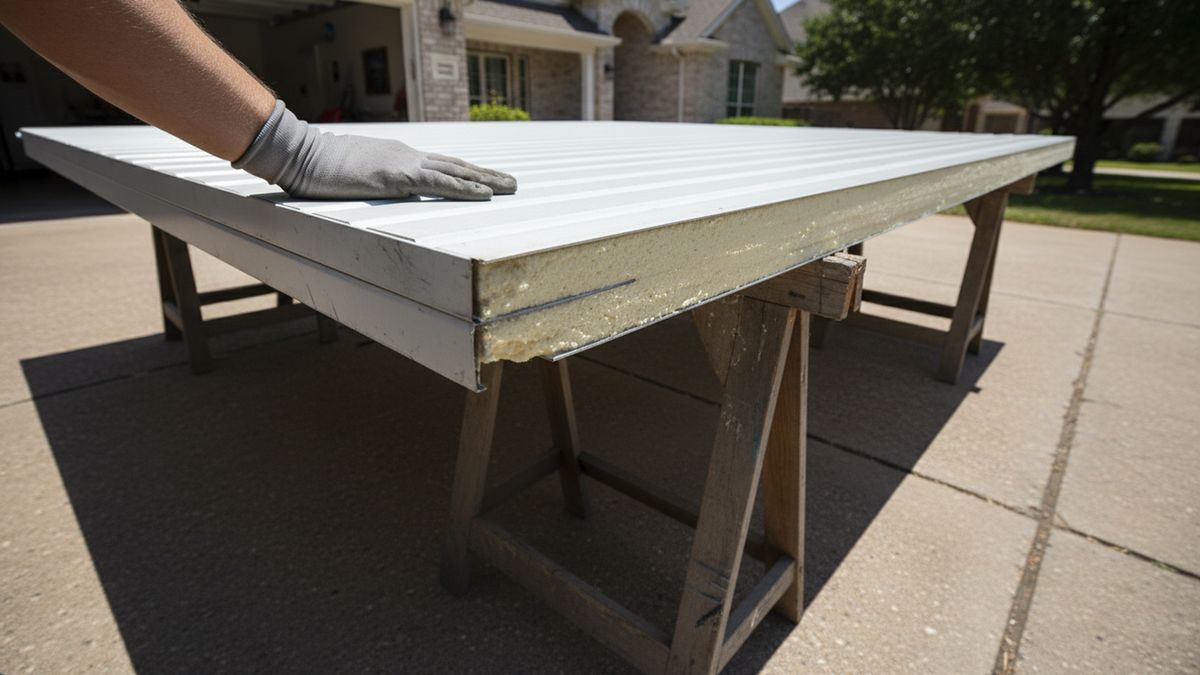
Garage door insulation comes in two materials and three constructions. A two-layer door uses a polystyrene panel and rates around R-6 to R-9. A three-layer door uses injected polyurethane and rates R-12 to R-18 or higher. Which construction you get matters more than the brand name on the section.
| Construction | Insulation | Typical R-value | Weight and feel | Where it fits |
|---|---|---|---|---|
| Single layer | None, one steel skin | About R-0 | Lightest, flexes, loud | Detached garages, sheds, budget rentals |
| Two layer | Polystyrene panel glued behind the skin, vinyl backer | R-6 to R-9 | Moderate stiffness, quieter | Attached garage with no living space above |
| Three layer | Injected polyurethane foam bonded to two steel skins | R-12 to R-18 and up | Stiffest, quietest, heaviest | Attached garage with bedrooms above or beside |
Polystyrene is the white foam board you know from packaging, cut to fit and slipped behind the steel. It insulates, but there are air gaps at the edges. Polyurethane is injected as a liquid that expands to fill the whole section and bonds to both skins, which is why triple-layer doors are both warmer and far more rigid. Push on the middle of each type in a showroom and the difference is obvious.
Two cautions on the numbers. Manufacturers quote R-value for the center of the section, not the whole door with its joints and edges, so real-world performance is lower across the board. And a door with a high R-value and a hardened, cracked bottom seal leaks more heat than a modest door with fresh seals. The rating is a starting point, not the whole story.
Steel Gauge, Seals and the Rest of the Story
Insulation is one of four things that decide how a door performs in heat, and the other three are easy to overlook on a quote.
- Steel gauge. Residential skins run from 24 to 27 gauge, and a lower number means thicker steel. A 24-gauge outer skin resists hail dents and oil-canning far better than the 26 or 27 gauge on a builder door.
- Thermal break. Better doors separate the inner and outer skins so heat does not conduct straight through the steel at the section edges.
- Perimeter seals. The bottom astragal, the vinyl stop molding down the sides and across the top, and the seals between sections. These are what stop hot air, dust and wasps, and they are the first thing to perish in the sun.
- Color. A dark door facing west absorbs more heat than an almond one. Insulation helps, but orientation and color set the starting temperature.
The sections between the seals also matter for the rooms around the garage. Sound follows the same paths as heat, and a triple-layer door with tight joints is noticeably quieter when it runs at six in the morning under a bedroom.

Which Frisco Homes Feel the Difference Most
The layout of the house decides the payoff more than the climate does. Three common Frisco arrangements sit at the top of the list.
A bedroom or game room over the garage. Heat rises through the garage ceiling into the floor above, and that room runs several degrees warmer than the rest of the house all summer. An insulated door is the cheapest thing that helps, ahead of adding attic insulation over the garage or a dedicated air return.
A west or south-facing door. Afternoon sun on the door is what drives the peak garage temperature. If the door takes direct sun from two o'clock until sunset, insulation earns its keep every day from May to September.
A garage used as a workshop, gym or laundry. If you spend time in there, or run a second refrigerator, the difference between 110 degrees and 90 is the difference between usable and not.
The opposite case is real too. A detached garage, a rear-entry garage that never takes direct sun, or a house you plan to sell within a couple of years may not justify the premium, and a well-built two-layer door or even a single-layer door is an honest choice.
What an Insulated Door Costs in Frisco, and What It Weighs
A new insulated steel door installed in Frisco runs $1,350 to $4,800, with most polyurethane double doors without windows landing in the middle of that range. Windows, a 24-gauge skin, a woodgrain finish and carriage-style overlays push it up. Our garage door installation service in Frisco confirms a fixed number once the opening is measured.
Weight is the detail people miss. A triple-layer 16-foot door can weigh 60 to 100 pounds more than the single-layer builder door it replaces. That means new torsion springs sized to the heavier door, and often a heavier-duty cable and drum set. Reusing the old springs on a new insulated door is a common mistake on cheap installs, and it leaves the opener lifting weight the springs should carry. Our spring sizing and replacement work is part of every door we install. DASMA technical data sheet 190 puts an overweight door at the top of its installation risks, so the springs have to be resized for the heavier door.
A builder 1/2 HP chain-drive opener will move a properly sprung insulated door, but if it is already past twelve years old, it is worth budgeting for a belt drive at the same time rather than having it fail a few months after the new door goes in.
Adding Insulation to the Door You Already Have
Retrofit kits, foam board or reflective panels cut to fit inside the sections, exist and they help a little. They add perhaps R-3 to R-5 to a single-layer door, do nothing for the joints or seals, and add weight the springs were not set for. On a door that is otherwise sound and under ten years old, a kit plus new perimeter seals is a reasonable stopgap. Have the balance checked afterward, because even 20 pounds changes how the door sits.
On a door that is past fifteen years, dented or rusting at the bottom, the money is better saved toward replacement. Our repair or replace decision table sets out how to make that call, and if the house is in a neighborhood with architectural controls, our guide to HOA approval for a garage door replacement explains what the committee needs to see. Insulation, happily, is inside the door and never part of the review.
Whichever way you go, the crew at Marlowe Garage Door Service in Frisco can measure the opening, check the springs and opener, and give you both the insulated and non-insulated price on the same visit so the choice is yours to make with real numbers.
Insulation Questions Frisco Homeowners Ask
What R-value should a garage door have in Texas?
For an attached garage with living space above or beside it, aim for a polyurethane door in the R-12 to R-18 range. For an attached garage with no rooms around it, a two-layer polystyrene door at R-6 to R-9 is a sensible middle ground. A detached garage rarely needs insulation at all.
Is an insulated garage door worth it if the garage is not air conditioned?
Usually yes, if it is attached. The benefit is not a lower electric bill; it is a garage that runs 10 to 20 degrees cooler on a 100 degree day, which keeps the shared wall and the room above from soaking up heat. The door also runs quieter and shrugs off hail better. On a detached garage the case is much weaker.
Does an insulated door need different springs?
Yes, almost always. A triple-layer door weighs considerably more than the single-layer door it replaces, and the torsion springs must be sized to the new weight. Reusing old springs leaves the opener straining and shortens its life. Any proper installation quote includes new springs matched to the door.
Polystyrene or polyurethane: which is better for Frisco?
Polyurethane, if the budget allows. It is injected as a liquid, fills the whole section and bonds to both skins, so it insulates better and makes the door far more rigid against hail and wind. Polystyrene is a cut foam panel behind a single skin, cheaper and still a real improvement over no insulation.